There are plenty of ways to spend a Saturday in Florida. Some people hit the golf course. Some head to brunch. And some put on scuba gear, jump into the water, and spend the day collecting giant predatory sea snails in the name of science.
On May 16, Sarasota Bay Watch hosted the Whelk Derby at its clam lease alongside partners Mote Marine Laboratory, New College of Florida, and Bubbles of Hope, turning an important ecological assessment into a hands-on day of research, teamwork, and a little friendly competition.
For those unfamiliar, lightning whelks are large marine snails native to Florida waters. They are also natural predators of clams, which means understanding their population around the lease is critical to the long-term success of restoration work. Native clams are one of nature’s best water filters, helping improve water clarity while supporting healthier seagrass and marine ecosystems. But like any restoration effort, balance matters.
That is where the derby came in.
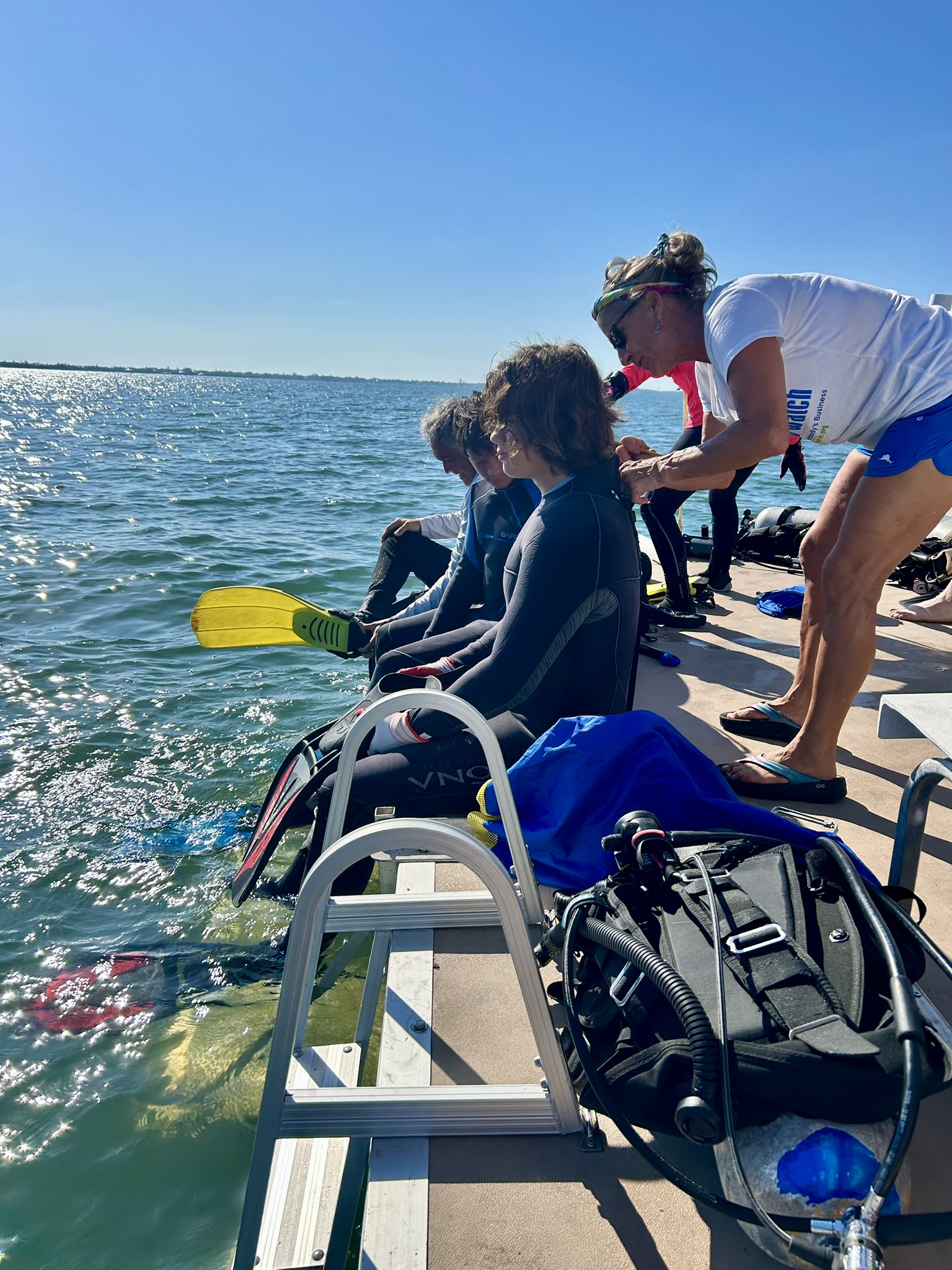
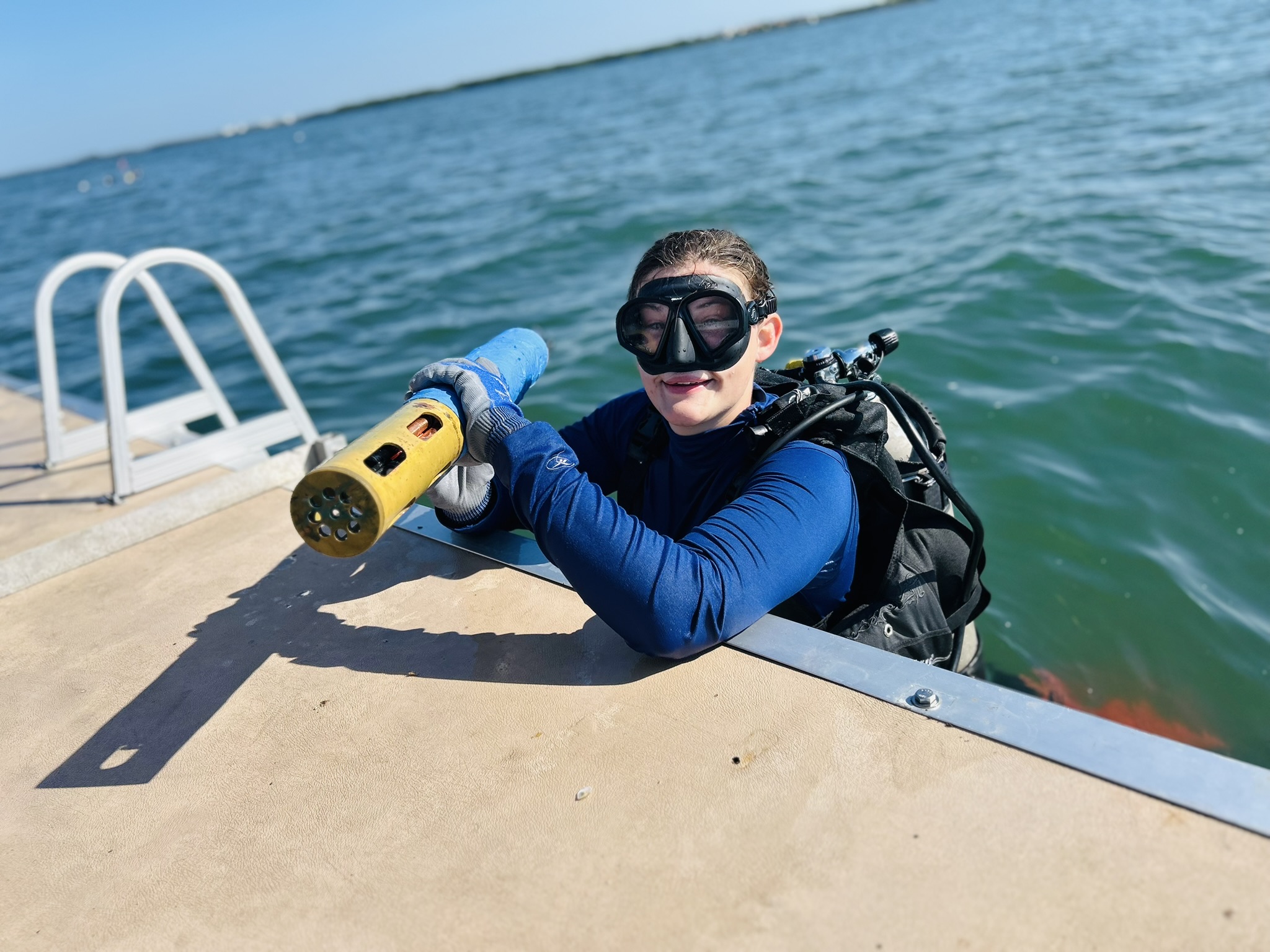
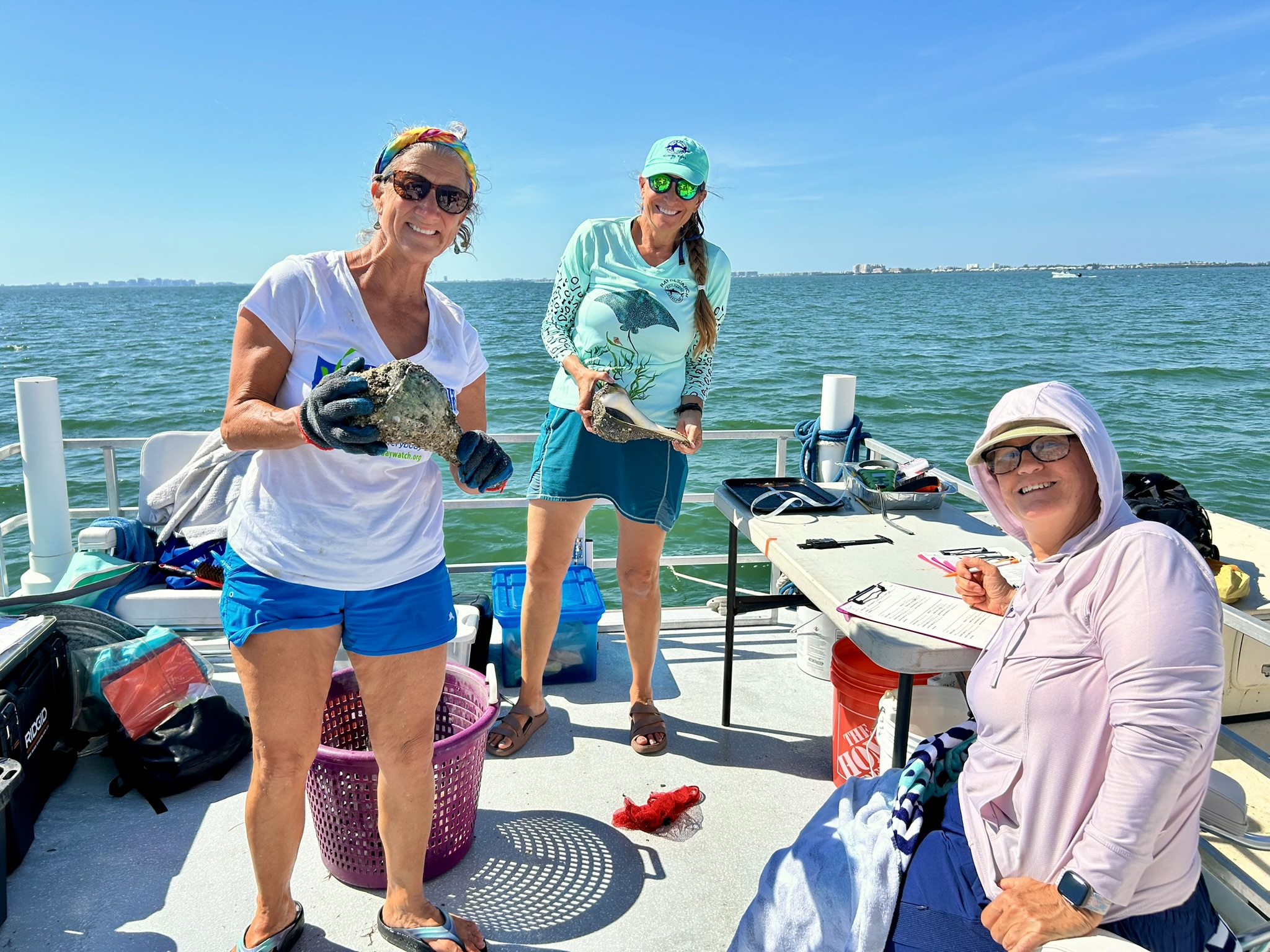
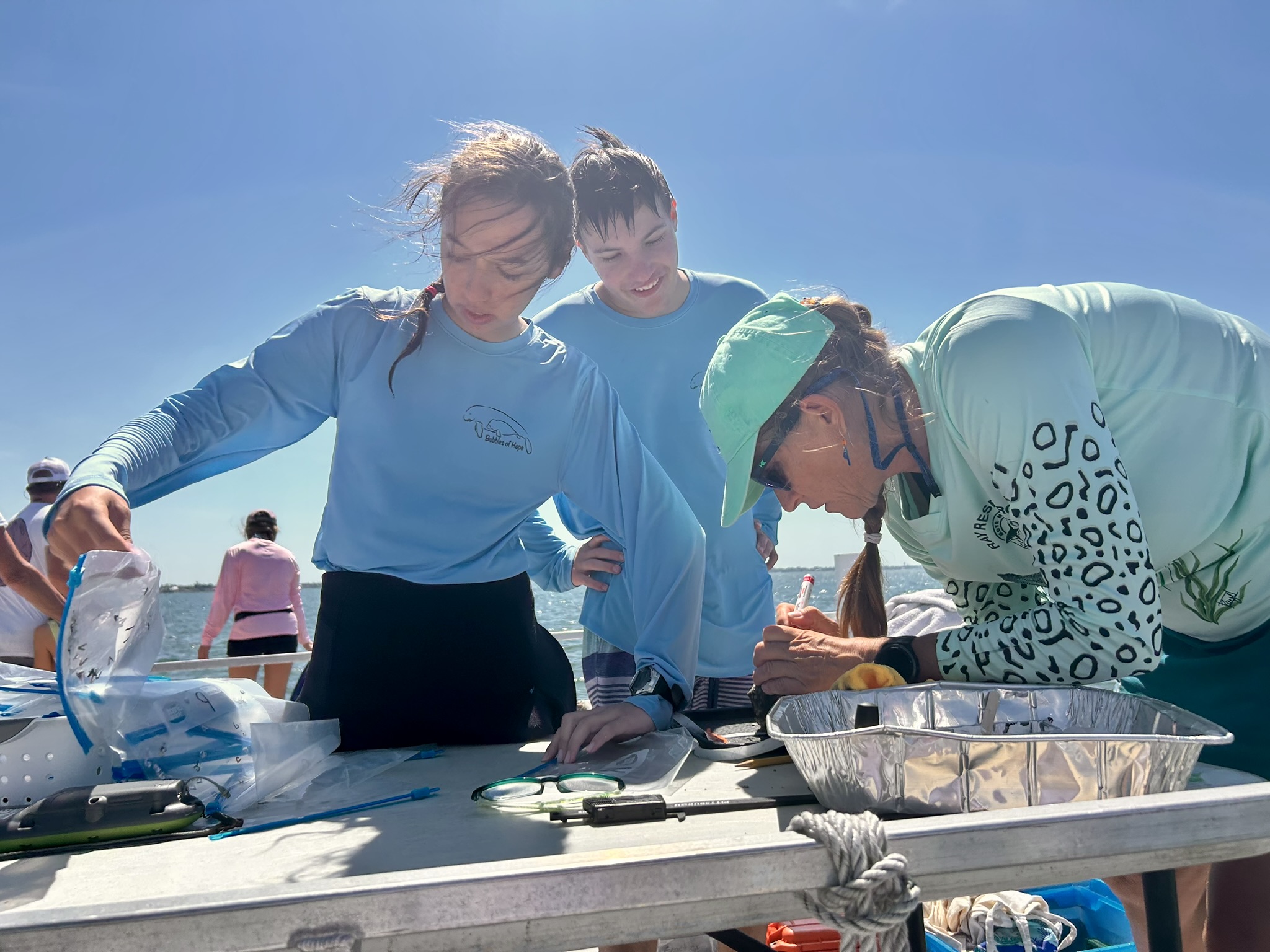
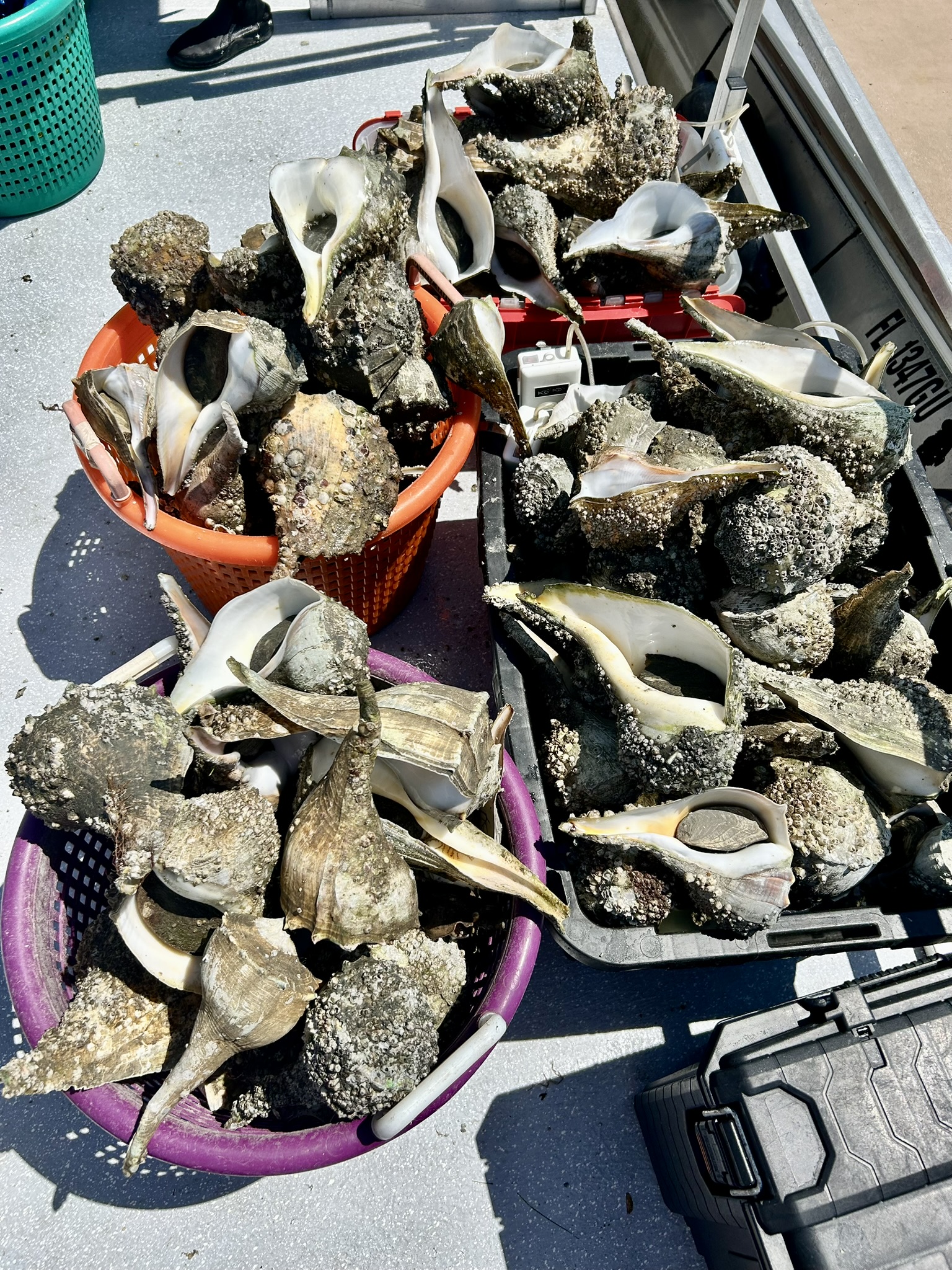
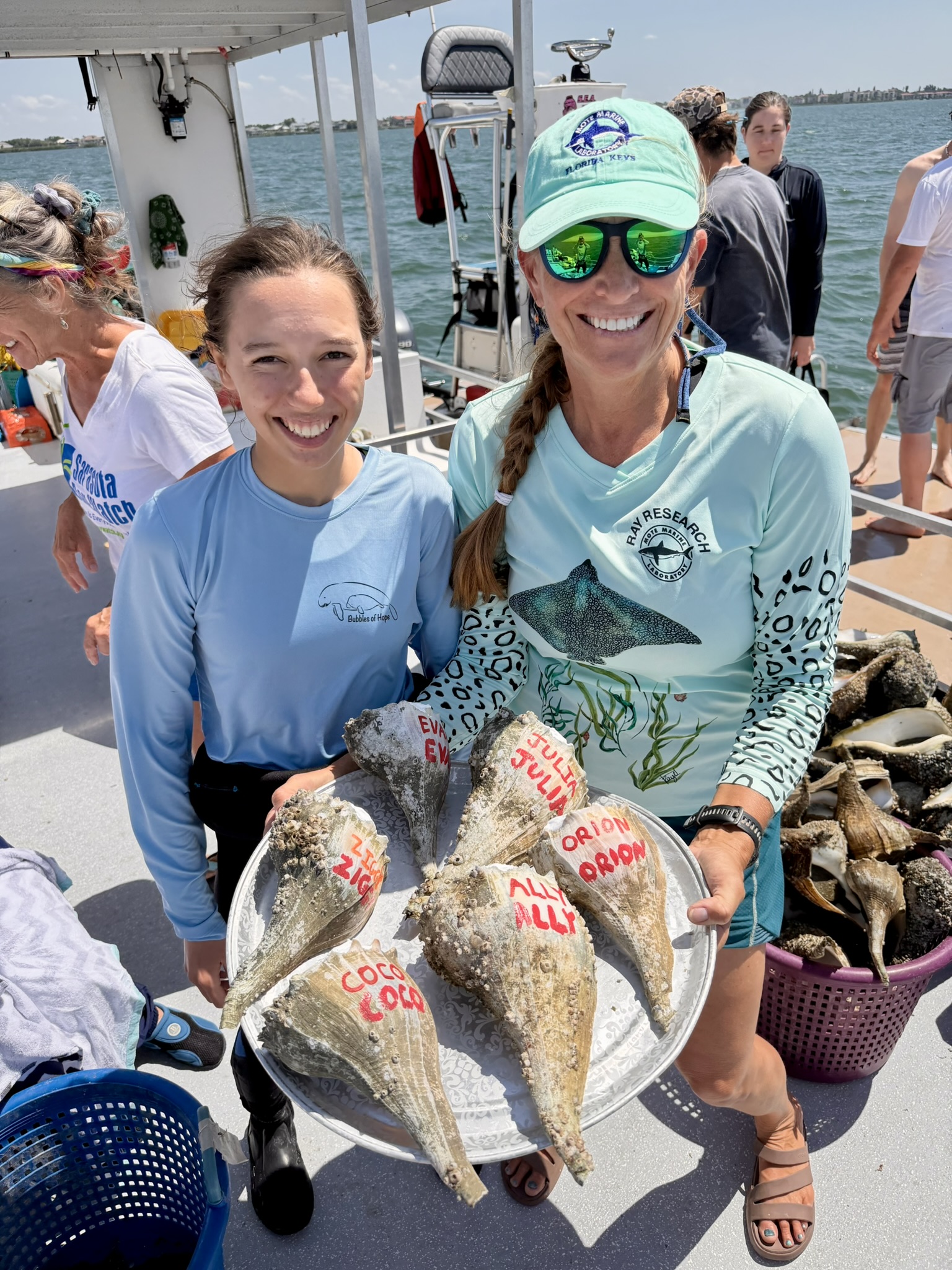
Four teams of three scuba divers entered the water to survey the lease, collecting whelks for counting, measuring, and tagging as part of ongoing research efforts. By the end of the day, the teams had counted an impressive 189 live whelks.
Of course, no derby is complete without some bragging rights. Categories included the heaviest whelk at 2.29 kg (5.49 pounds), the longest shell at 32 cm (12.6 inches), and the chubbiest whelk at 7.8 inches around. Rest assured, all animals were carefully handled and released.
The atmosphere on the water was equal parts field research and community gathering. Divers compared notes between rounds, volunteers helped process catches, and researchers gathered valuable data that will help guide future management of the lease.
But the Whelk Derby is part of something bigger.
Sarasota Bay Watch is expanding its collaboration with New College of Florida through a long-term water quality monitoring project at the clam lease. Together, the organizations are deploying a water-quality sonde, a specialized instrument that continuously records environmental conditions including temperature, salinity, dissolved oxygen, pH, algae, and turbidity. Mote Marine Laboratory also has an acoustic receiver at the lease and will monitor tagged whelk movement.
That continuous stream of data gives researchers and students a much clearer picture of what is happening beneath the surface day after day and season after season. Combined with direct field observations from the lease, it creates a powerful tool for understanding how shellfish restoration impacts overall ecosystem health.
In other words, this is not just about counting clams or collecting whelks. It is about building real scientific infrastructure right here in local waters. The derby also created new questions ripe for future research.
The partnership creates hands-on opportunities for students to participate in applied marine science, connecting classroom learning directly to active restoration work in the field. That kind of collaboration matters, especially in a region where coastal health is tied so closely to community identity, recreation, tourism, and quality of life.
Since 2008, Sarasota Bay Watch has focused on restoring and protecting local ecosystems through volunteer-driven action. From underwater cleanups to habitat restoration and shellfish projects, the organization believes the best way to protect the environment is to get people directly involved in the work itself.
Sometimes that work looks like planting habitats.
Sometimes it looks like pulling trash from the water.
And sometimes it looks like a boat full of scuba divers proudly holding giant sea snails under the Florida sun.