
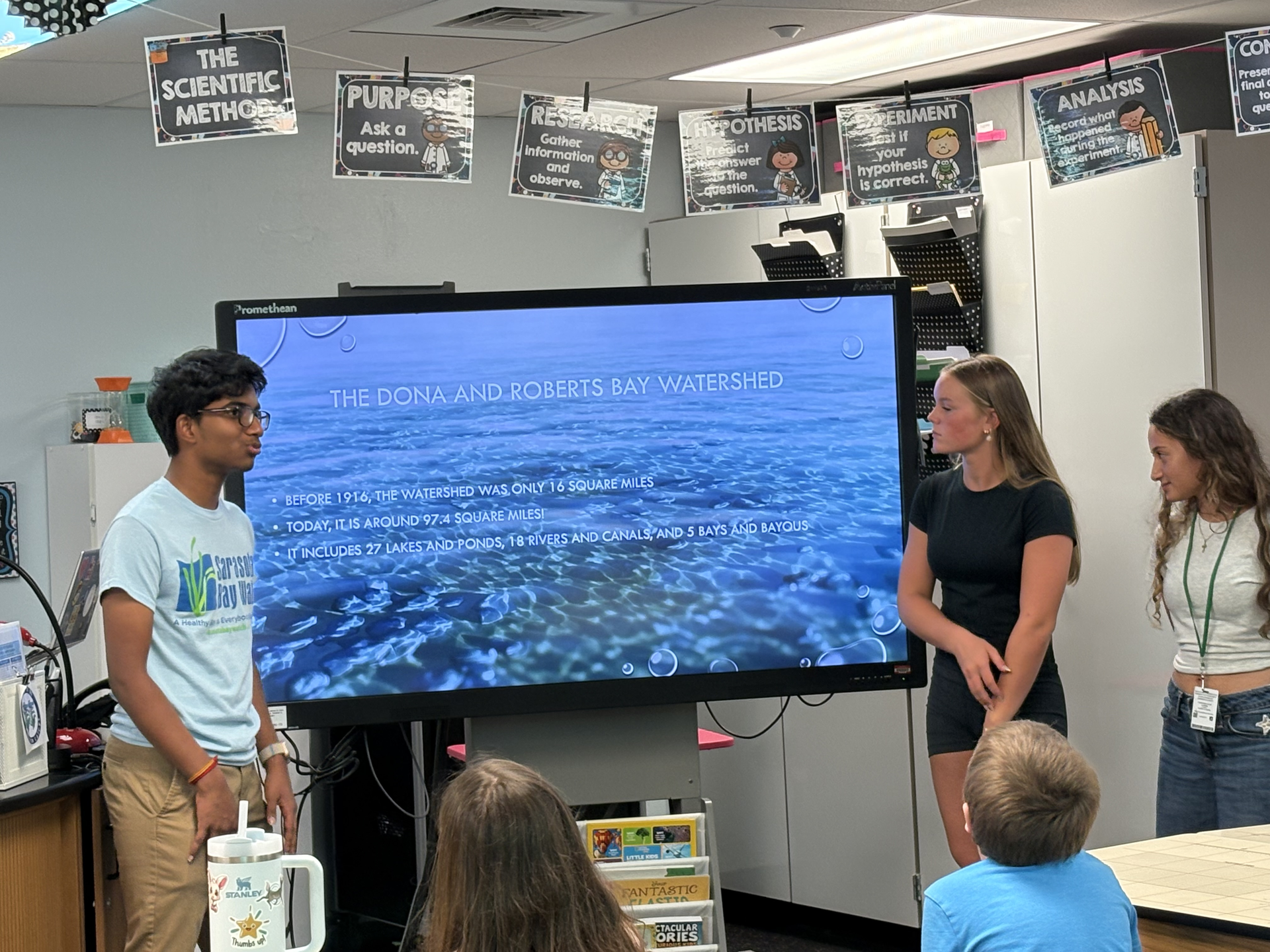
At Sarasota Bay Watch, we believe that inspiring a love for our local waters starts early. Our Youth Leader Marine Camp is an after-school program designed to spark curiosity, leadership, and environmental awareness in students, led by youth, for youth. Our Youth Leaders (students from 8th grade through high school) research, plan, and teach each lesson. While educating younger students, they are also building skills in leadership, teamwork, science communication, and confidence in public speaking.
We host up to 22 students per class at Garden Elementary in Venice and Phillippi Shores in Sarasota. These 4th and 5th graders participate in a free, one-hour, after-school marine science program covering topics like watersheds, coral reefs, squid dissection, sharks, sea turtles, plastics, and coastal birds.
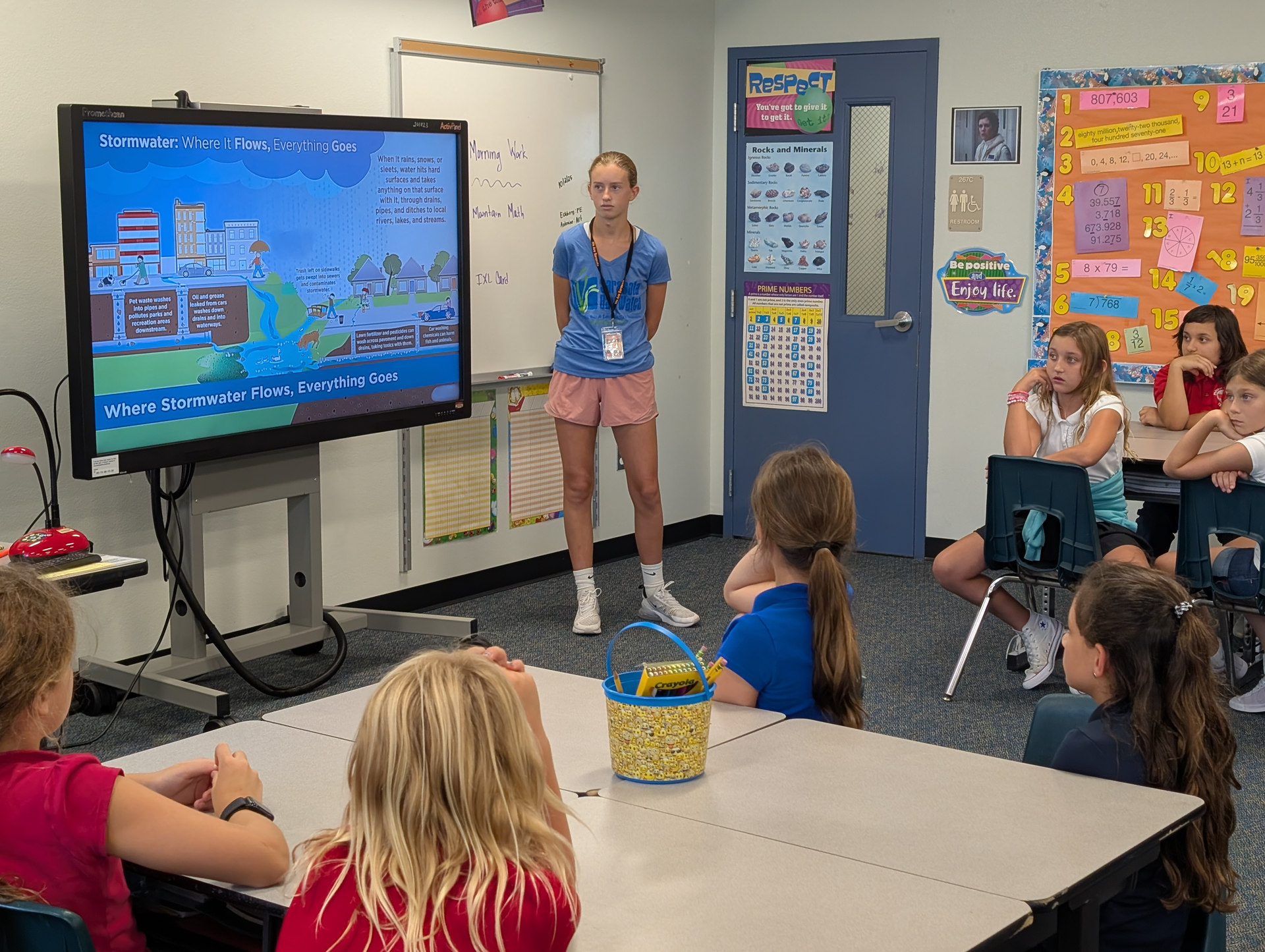
Students begin each session with an engaging presentation, then dive into hands-on learning that connects science to their own backyard helping them understand how what happens on land affects the health of Sarasota Bay.
Week One : Understanding Watersheds
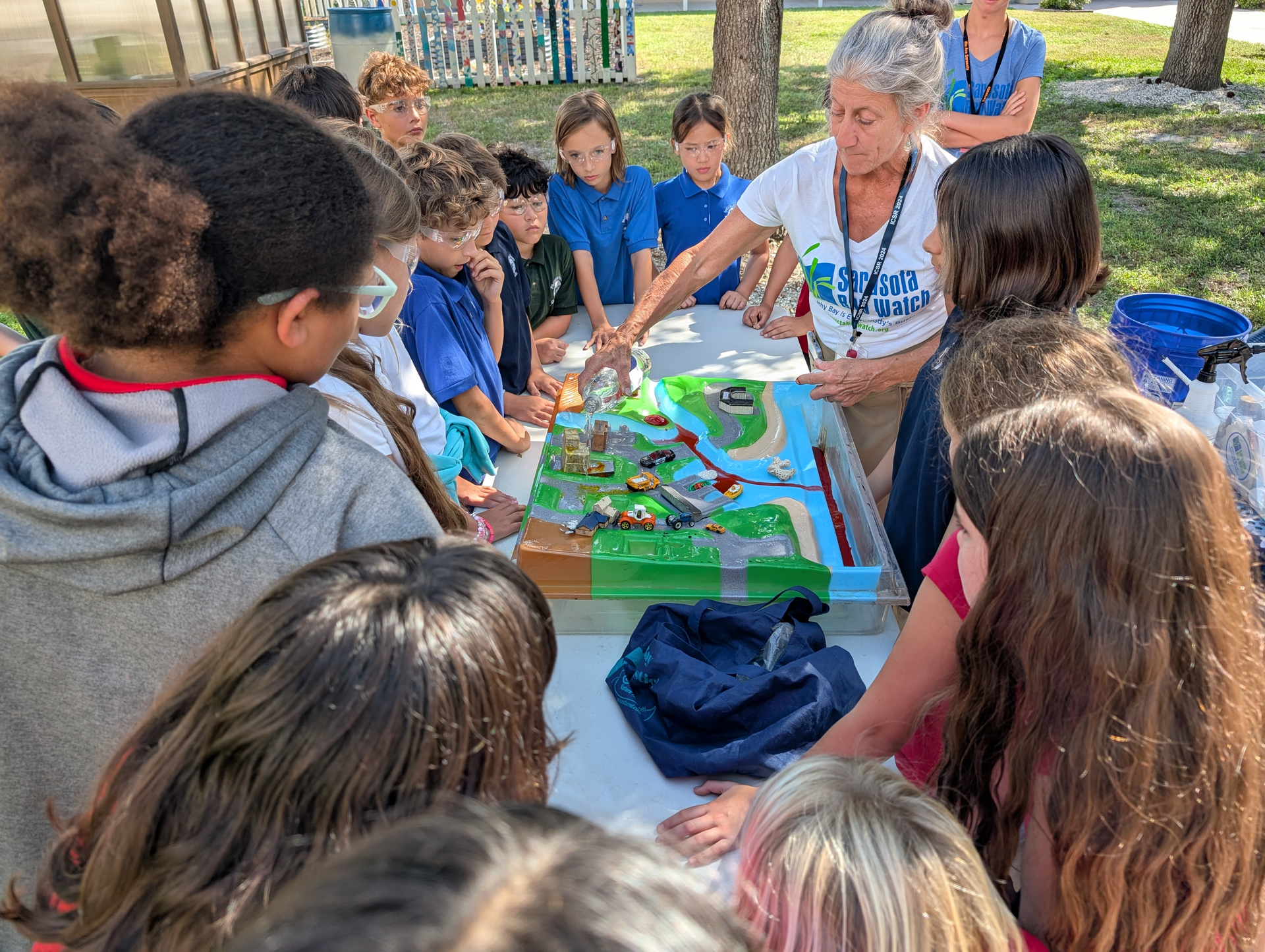
Our first week students explored watersheds. They learned how rain and runoff move through their neighborhoods and eventually into Sarasota Bay. Using an edible materials like sprinkles, chocolate syrup, colored coconut flakes, and cocoa powder, they saw firsthand how things like oil, fertilizers, yard waste, and chemicals enter waterways and impact marine life. This foundation helps young learners understand that caring for the bay begins at home long before water ever reaches the shoreline. Huge thanks to Sarasota Bay Estuary Program for providing SBW with their hand me down watershed model!
Week Two : Coral Reefs & Restoration
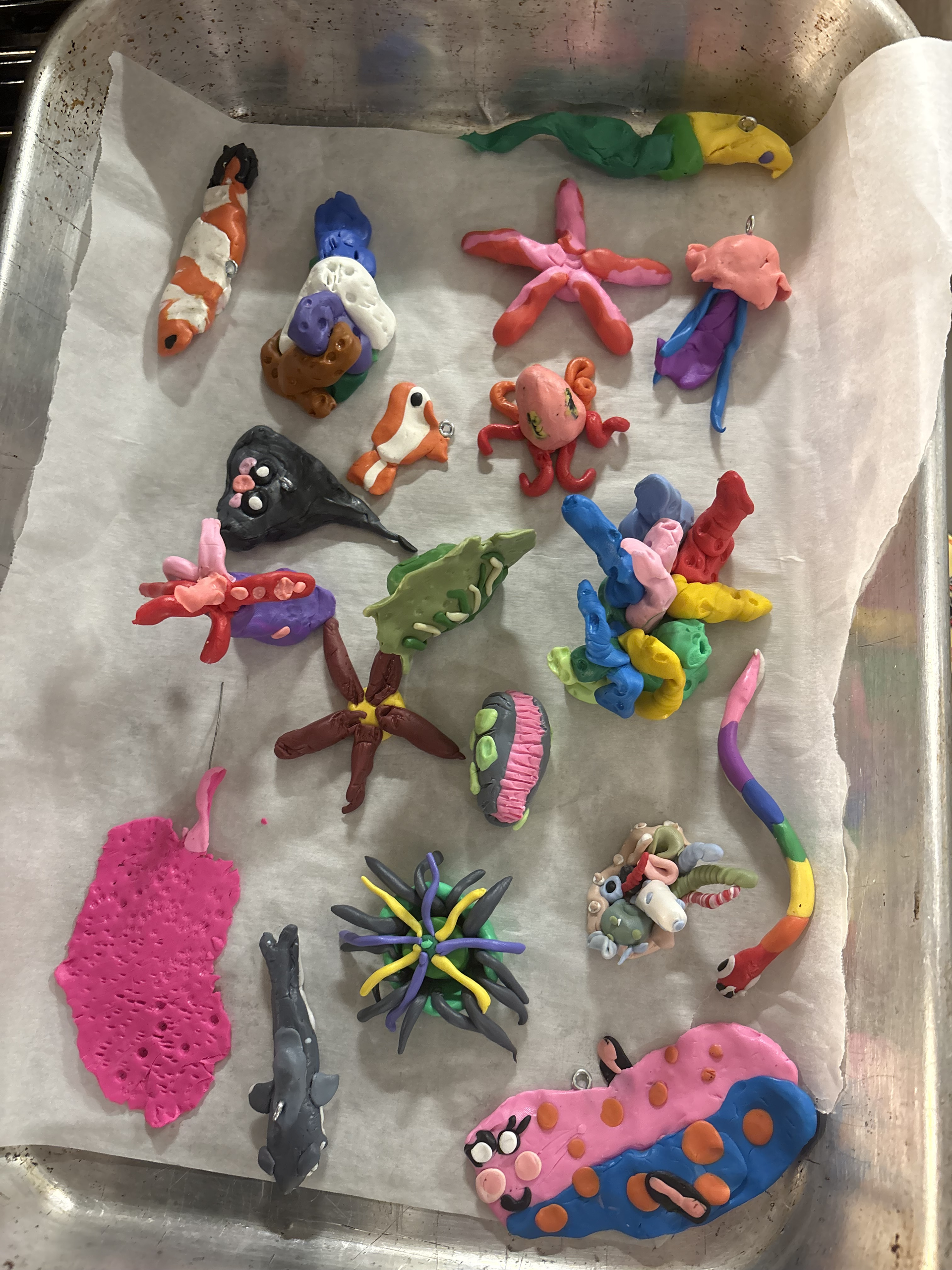
Students then dove into the world of coral reefs learning what coral is, how it grows, and what causes bleaching. Using photos with grid overlays, they practiced data collection like real scientists and explored current efforts to restore reef ecosystems. The hands-on highlight was the clay coral reef diorama, where students each created a coral or reef animal and assembled a vibrant, multi-layered reef scene full of biodiversity.


Youth Leader Spotlight – Coral Lesson
“I enjoyed teaching about the Coral Reefs because the kids were very excited to learn. They listened well and had fun working on the clay models. I enjoyed working with a partner on the slideshow and in person to help the kids. I felt confident in monitoring the kids and speaking about the presentation in front of them.”
— Audrey Luke
Week Three : Squid Dissection (Always a Favorite!)
Next came squid dissection, a crowd favorite every year. Students learned squid anatomy, adaptations, and scientific dissection skills, all while building confidence with hands-on learning. The squid used were ethically purchased frozen bait and later donated to the Riverview Aquadome as food for marine animals. Thank you to teacher Katrin Rudge for loaning us the dissecting trays.


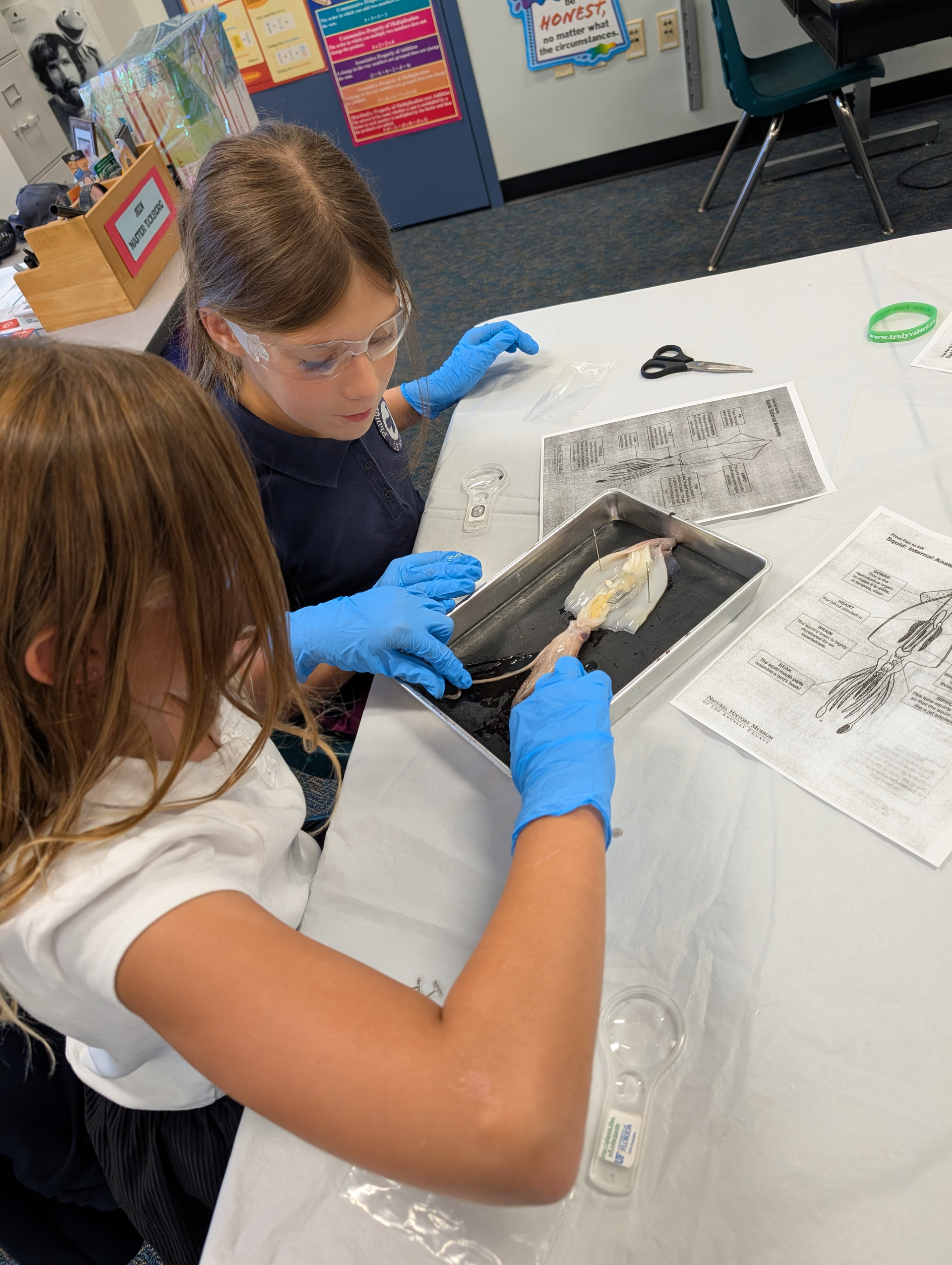
Youth Leader Spotlight – Squid Lesson
“I had a really good experience teaching the students about squids. I felt very comfortable speaking in front of them because they were all very kind, respectful, and interested. They asked so many questions and all seemed very interested in the topic. I really enjoyed walking around and telling the students interesting squid facts and helping them locate certain parts of the squid during the dissection. I also really enjoyed having one-on-one conversations with the children in which they told me how cool they thought this dissection was and what they wanted to name their squid. Overall, I think the squid dissection is a really great and engaging activity, and I think the students learned a lot from it.”
— Amanda Pizarro
Week Three : Shark Science & Conservation
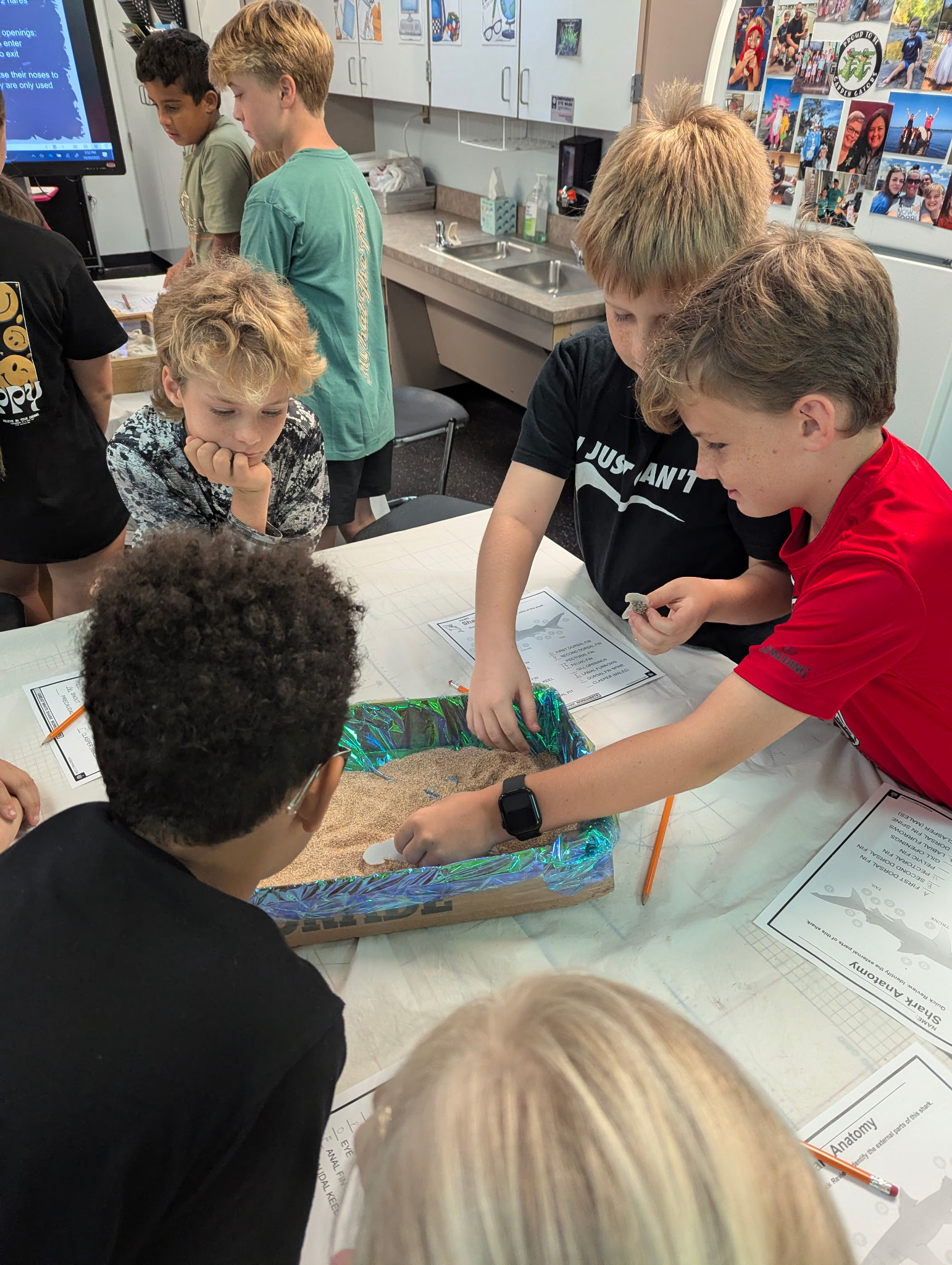
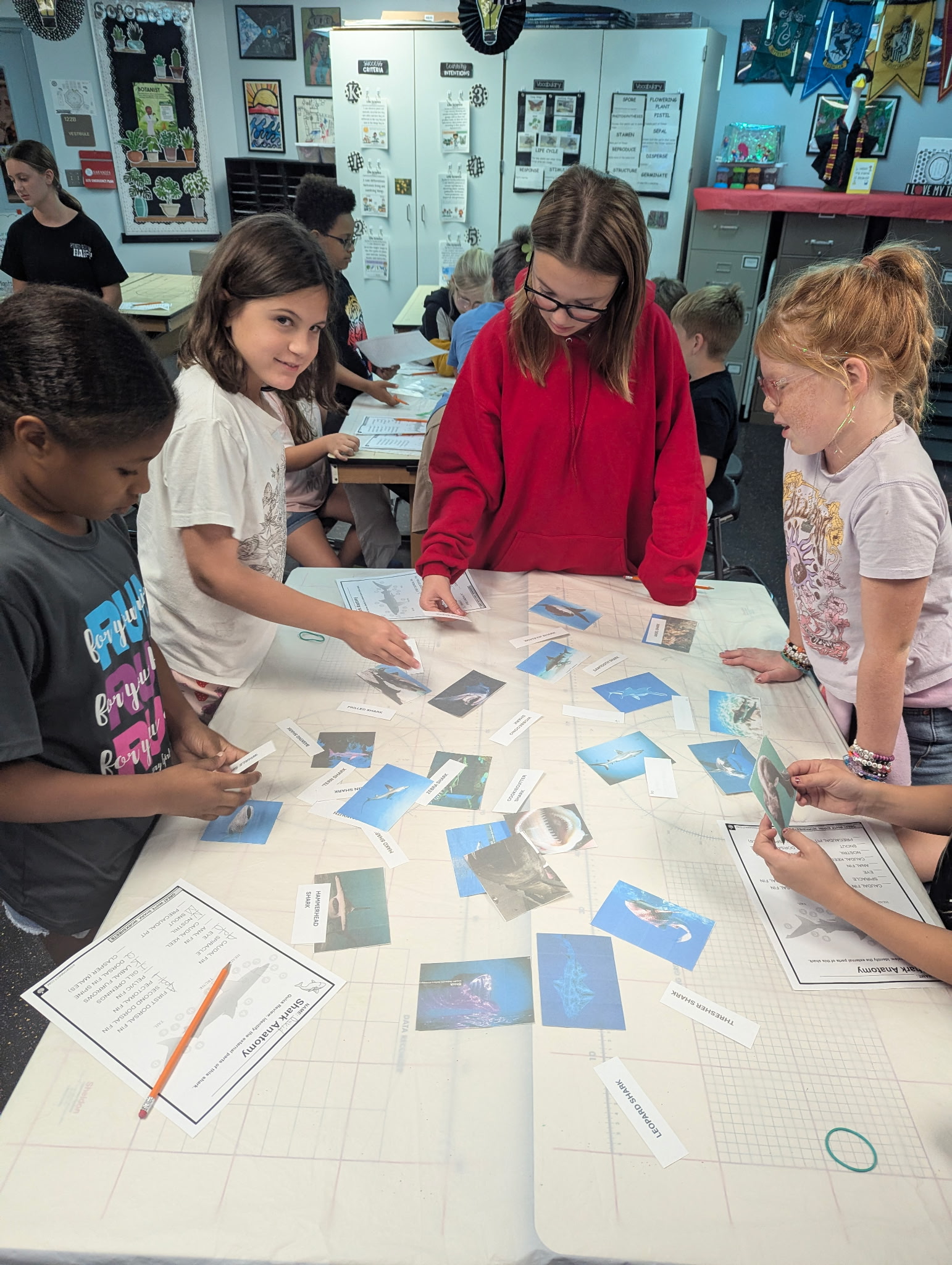
Shark week is always packed with excitement and cool specimens! Thanks to materials loaned by MISS (Minorities in Shark Science), students explored shark teeth, skin, skeletons, and jaws up close. They used flowcharts to identify species, learned about shark senses including the Ampullae of Lorenzini the small, jelly-filled pores on the head and snout that allow them to detect electric fields in the water, and discovered how sharks help keep reef systems healthy.

More to Come!
We are now about halfway through Marine Camp, and the students are already showing a stronger understanding of how our coastal ecosystems work and how humans are connected to them.
The Youth Leader Marine Camp helps young people learn, lead, and connect, developing a sense of responsibility for their environment while strengthening their leadership skills. These hands-on lessons don’t just teach science they nurture lifelong stewards of Sarasota Bay.
In the coming weeks, we’ll continue building on this foundation with lessons on:
- Sea Turtles
- Plastic Pollution & Solutions
- Coastal Birds & Habitat Protection
These upcoming topics will continue to tie local wildlife to real-world stewardship, giving students more tools to protect the places they live, learn, and play.