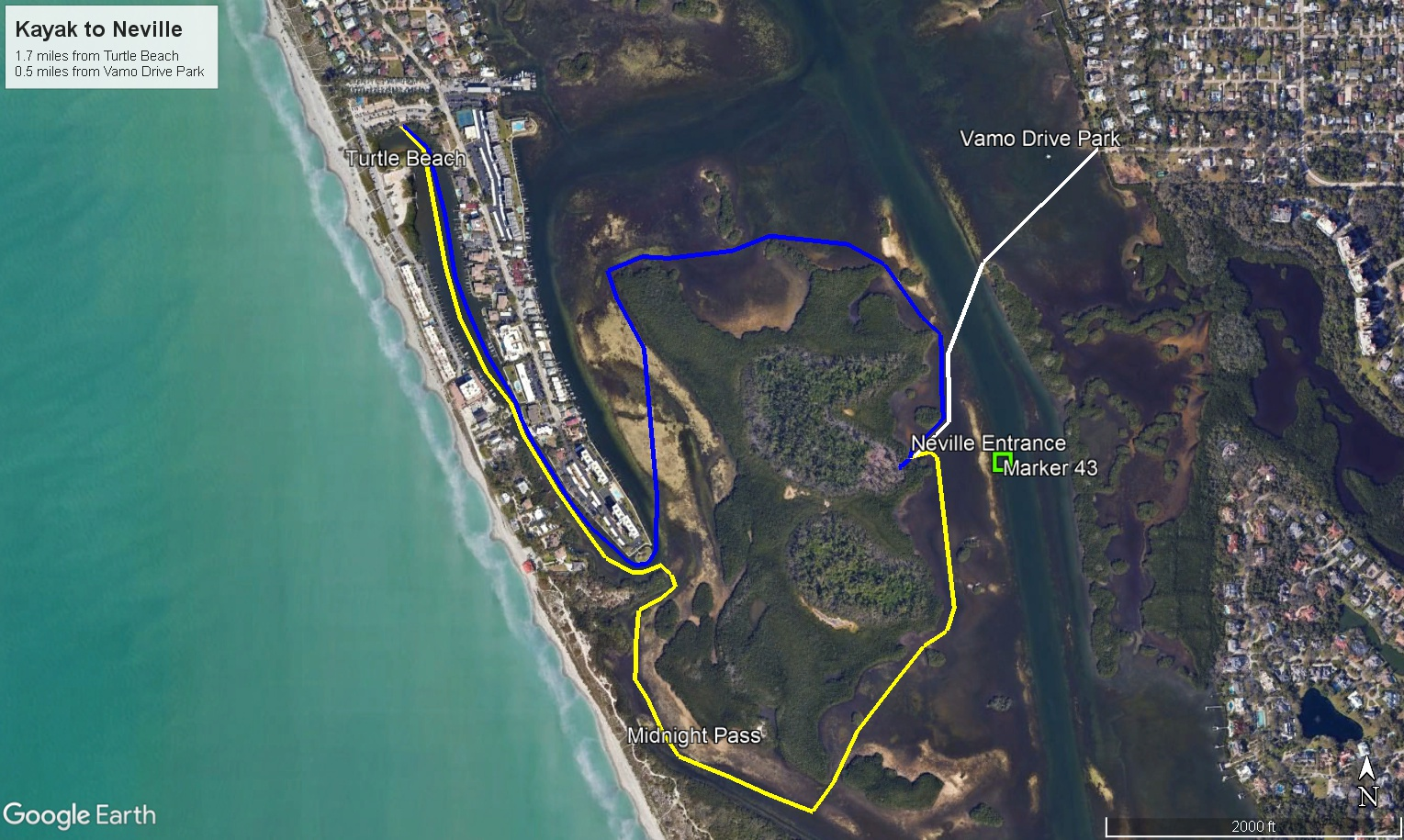
Tucked between Osprey and Turtle Beach in Little Sarasota Bay, Jim Neville Marine Preserve spans 104 acres of vibrant coastal habitat. Owned by Sarasota County, this island sanctuary is largely dominated by lush mangrove forests, but around 30 acres tell a more complex story—one shaped by human intervention and ecological recovery. In the 1960s, dredging for the Intracoastal Waterway raised parts of the island’s elevation, paving the way for invasive plants to take root. Sarasota Bay Watch has been a dedicated steward of the preserve. Now, after 15 years of marine debris cleanups with student volunteers and community members this altered landscape is the focus of an ambitious naturalization effort. In 2022, SBW received approval from the county to remove invasive vegetation and replant native species, aiming to restore ecological balance, improve habitat for wildlife, and enhance the experience for paddlers, birders, and nature lovers.
Community-Powered Science and Stewardship
Naturalization
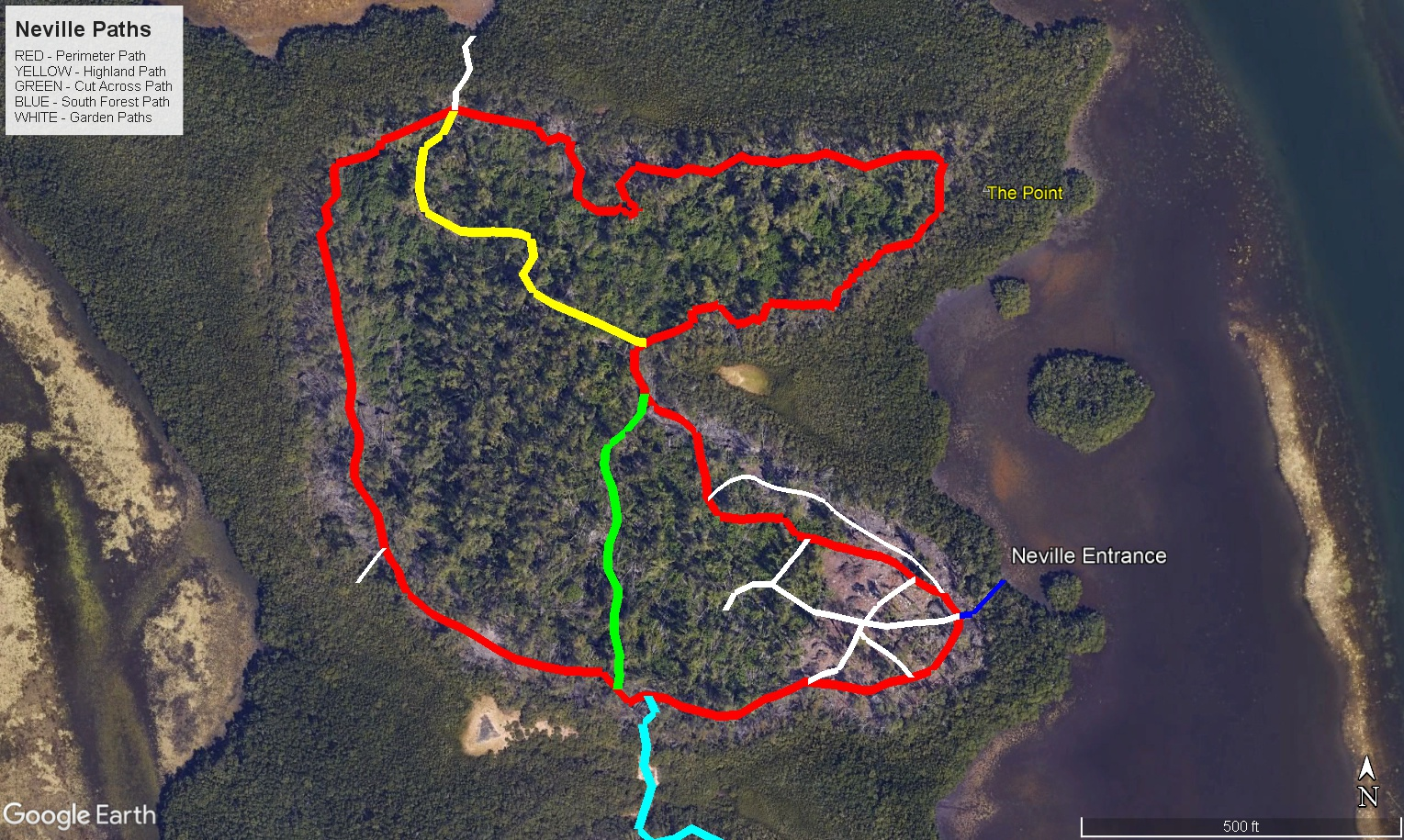
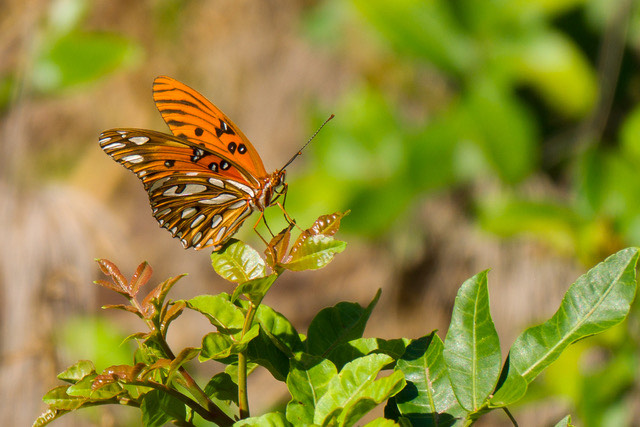
Naturalization work includes replacing invasive plants with native species like pollinator-friendly species, berry- and seed-producing shrubs at higher elevations, and salt-tolerant vegetation closer to the waterline. To make the preserve more accessible and enjoyable for all, teams are also grooming, extending, and clearly marking walking paths, while removing trip hazards and overhanging limbs.

Birding Survey
This student-led study tracks bird diversity and abundance in response to ongoing habitat naturalization. As native vegetation returns, so do birds, butterflies, and other wildlife, making the Jim Neville Marine Preserve a living classroom and vital refuge. Youth participation in these counts helps paint a clearer picture of how naturalization shapes the ecosystem over time.
Join us in our mission to preserve and enhance this unique coastal treasure!